

Imagine sitting in a dark theater. The screen flickers with shadows. A child whispers, “I see dead people.” The crowd gasps. That’s the magic M. Night Shyamalan sparked in 1999 with The Sixth Sense. He turned everyday fears into global phenomena. His films blend suspense, family drama, and shocking reveals. Yet, his path twisted like his plots. From overnight fame to brutal backlash, Shyamalan’s story mirrors Hollywood’s highs and lows.
According to the Motion Picture Association, supernatural thrillers like his earned over $1.2 billion worldwide in the early 2000s. The Sixth Sense alone grossed $672 million on a $40 million budget, per Box Office Mojo data. It ranked as the second-highest earner of 1999, behind Star Wars: Episode I. These stats fueled his ascent. But success bred pressure. Audiences craved more twists. Critics sharpened their knives. Shyamalan’s journey offers raw lessons on creativity, resilience, and reinvention. Dive in to see how one director’s vision bent but never broke.
Early Beginnings: From Super 8 Dreams to Indie Grit
- Night Shyamalan started young. Born Manoj Nelliyattu Shyamalan in 1970 in Mahé, India, he moved to Penn Valley, Pennsylvania, as a baby. His parents, both doctors, pushed medicine. But at age eight, a Super 8 camera changed everything. He shot over 45 short films by 17. One unknown fact: his first “movie” recreated a family trip to Disney World, complete with scripted dialogues for relatives.
He studied at New York University’s Tisch School of the Arts. There, he adopted “Night” as his middle name, inspired by Lakota culture. It symbolized his creative awakening. Shyamalan borrowed $25,000 from family for his debut, Praying with Anger (1992). This semi-autobiographical drama explored his Indian roots and Catholic upbringing. Shot in Chennai, India, it premiered at Toronto International Film Festival. Critics praised its raw energy, but it earned just $330,000. Still, it screened on Canadian TV and built his confidence.
Next came Wide Awake (1998), a comedy-drama about a boy questioning faith after his grandfather’s death. Miramax shelved it for three years due to low buzz. Shyamalan’s parents served as associate producers. The film flopped commercially but showed his knack for blending humor and heart. These indies honed his style: quiet tension, personal stakes, and subtle reveals.
- Key Influences: Shyamalan idolized Steven Spielberg and Alfred Hitchcock. He credits Raiders of the Lost Ark for sparking his adventure love. The Exorcist shaped his supernatural edge.
- Early Struggles: Pre-Sixth Sense, he rewrote She’s All That uncredited, helping greenlight it. He co-wrote Stuart Little too. These gigs paid bills but frustrated his directing dreams.
By 1998, Shyamalan faced rejection. Agents called him “too ethnic” for mainstream gigs. Yet, persistence paid off. He sold The Sixth Sense script for $2 million. Hollywood noticed. His rise was just beginning.
The Meteoric Rise: The Sixth Sense and the Twist Era
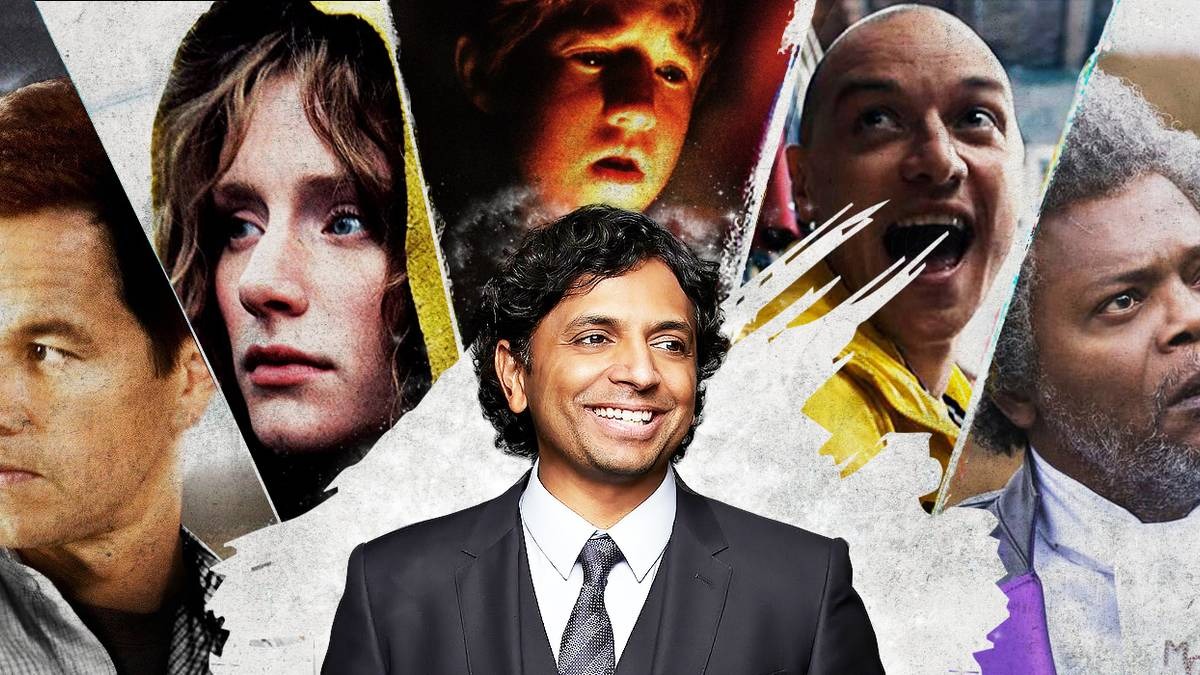
The Sixth Sense exploded onto screens August 6, 1999. Shyamalan wrote it in three months, inspired by a ghost story idea. Bruce Willis played child psychologist Malcolm Crowe. Haley Joel Osment stole scenes as Cole, the boy seeing ghosts. The budget: $40 million. Worldwide gross: $672 million. It held the top spot for five weeks.
Critics raved. Roger Ebert gave it four stars, calling it “a thriller about the supernatural with the emotional impact of great drama.” Six Oscar nods followed, including Best Picture and Best Director. Shyamalan, 29, became “the next Spielberg.” Newsweek put him on the cover in 2002.
The twist—Malcolm is dead—redefined cinema. Audiences left theaters stunned, debating clues. One unknown fact: Shyamalan froze Osment in an ice box for the “I see dead people” scene. No CGI. Just real breath fog. This raw technique amplified chills.
Success snowballed. Shyamalan reunited with Willis for Unbreakable (2000). A $75 million budget yielded $248 million worldwide. Samuel L. Jackson played comic-book villain Elijah Price. Critics lauded its superhero deconstruction—74% on Rotten Tomatoes. Shyamalan pitched it as a “comic book movie.” Disney marketed it subtly, fearing genre fatigue. It became a cult hit, spawning sequels 18 years later.
Signs (2002) starred Mel Gibson as a farmer spotting alien crop circles. Budget: $72 million. Gross: $408 million. It topped U.S. charts with a $60 million opener. Positive reviews (75% RT) praised its family focus amid invasion scares. Unknown fact: Shyamalan crashed his car into a barn for authenticity. No stunt double.
The Village (2004) pushed boundaries. A $60 million budget led to $256 million gross. Bryce Dallas Howard debuted as blind Ivy Walker. The twist: modern America hides behind 19th-century facades. Mixed reviews (43% RT) hit hard. Some called the reveal “cheesy.” Yet, it won Oscar nods for cinematography.
These films grossed over $1.5 billion combined. Shyamalan’s brand: twists that probed faith, loss, and isolation. He appeared in cameos, like the stadium vendor in Unbreakable. Fans hunted them. Hollywood courted him for Harry Potter and Life of Pi. He turned them down for originals.
| Film | Budget | Worldwide Gross | RT Score |
| The Sixth Sense | $40M | $672M | 86% |
| Unbreakable | $75M | $248M | 74% |
| Signs | $72M | $408M | 75% |
| The Village | $60M | $256M | 43% |
Stats show his peak: four films, average 70% RT, $396 million per movie. He embodied the American Dream—immigrant kid tops charts.
The Fall: Ego, Expectations, and Box-Office Bombs
Hubris crept in. After The Village, Shyamalan chased bigger swings. Lady in the Water (2006) bombed hardest. A $70 million fairy tale with Bryce Dallas Howard as a water nymph. Shyamalan cast himself as a prophetic writer. Critics panned it—25% RT. Gross: $72 million, barely breaking even. Unknown fact: He wrote it as a bedtime story for his kids. Disney fought him on the self-insert role.
Pressure mounted. Audiences expected twists. The Happening (2008) twisted eco-horror: plants release suicide toxin. Mark Wahlberg starred. Budget: $48 million. Gross: $163 million. But 19% RT scorched it. Wahlberg’s line readings drew memes. Shyamalan later admitted it failed because he ignored audience fears.
The nadir: The Last Airbender (2010). Adapting Nickelodeon’s hit, he whitewashed Asian roles. Budget: $150 million. Gross: $319 million. Razzie wins for Worst Director. 5% RT. Fans protested casting. Unknown fact: Shyamalan cut a villain subplot for a sequel that never came. It scarred his rep.
After Earth (2013) teamed him with Will Smith. Father-son crash-land on hostile Earth. $130 million budget. $243 million gross. 11% RT. Sony hid Shyamalan’s name in ads. Smith called it his “most painful failure.” Unknown fact: Shyamalan learned “ghosting”—actors vanish mid-scene—from this. No twists hurt too.
Why the slump? Analyses point to ego. BFI noted racism: mispronounced names like “Shamalamadingdong.” Vice called it mockery. Shyamalan’s confidence post-Sixth Sense invited backlash. Per a 2017 Business Insider chart, his grosses dipped 70% from peak. He spoke at Drexel University: “I questioned every thought.” Hollywood passed on him. He self-financed next.
- Lessons from the Fall:
-
- Twists fatigue audiences—predictability kills surprise.
-
- Studio interference (like Airbender‘s casting) erodes vision.
-
- Adaptations demand fidelity; straying alienates fans.
-
- Ego blinds: Shyamalan surrounded himself with yes-men.
His total slump gross: $797 million on $398 million budgets. Average 15% RT. From Spielberg heir to punchline.
The Comeback: Low Stakes, High Thrills, and Self-Financing
Rock bottom sparked reinvention. Shyamalan mortgaged his house for The Visit (2015). A $5 million found-footage horror: kids uncover grandparents’ secrets. Gross: $98 million. 68% RT. Critics hailed it as “return to form.” Unknown fact: He shot it secretly in Pennsylvania barns, dodging leaks.
Blumhouse partnered next. Split (2016): James McAvoy as a man with 23 personalities. $9 million budget. $278 million gross. 78% RT. Twist: sequel to Unbreakable. Fans erupted. Unknown fact: McAvoy improvised accents from real dissociative cases.
Glass (2019) closed the trilogy. $20 million budget. $247 million gross. 37% RT mixed it, but die-hards loved the meta nods. Unknown fact: Shyamalan planned it since 2000, hiding clues in Split‘s credits.
Old (2021): Beach accelerates aging. $18 million budget. $90 million gross. 38% RT. Praised visuals, panned dialogue. Twist: pharma conspiracy. Shot in Dominican Republic.
Knock at the Cabin (2023): Dave Bautista forces apocalypse choice. $20 million budget. $54 million gross. 67% RT. Strongest reviews since Split. Unknown fact: Shyamalan’s cameo as a chicken fryer salesman aired during the plot’s tension.
Trap (2024): Josh Hartnett as serial killer at a concert. $30 million budget. $85 million gross so far. 57% RT. Mixed, but Hartnett shines. Unknown fact: Inspired by 1985’s Operation Flagship sting.
Comeback stats: $752 million on $102 million budgets. Average 57% RT. Self-financing gave freedom. He grew: fewer forced twists, more character depth. Per Polygon, empathy returned post-2010s cynicism.
Legacy: Twists That Shaped Cinema and Lessons for Creators
Shyamalan’s career grossed $3.15 billion across 14 films. He influenced twists in Fight Club echoes and modern horror. Yet, his falls teach: balance vision with audience. Unknown fact: He executive-produced Servant (2019-2023), directing pilots. It blended his style seamlessly.
His story proves resilience. From indie kid to fallen star to indie king again. Aspiring filmmakers, note: innovate, but listen. Twists work when earned.
Watch Trap now. Spot the cameo. Share your favorite Shyamalan twist below—what’s next for him?
FAQs
What Made The Sixth Sense Such a Game-Changer for Shyamalan?
It blended psychological depth with a jaw-dropping reveal. Grossing $672 million, it earned six Oscar nods and branded him the twist master. Audiences replayed it for clues, boosting home video sales.
Why Did Shyamalan’s Career Slump After The Village?
High expectations met ego-driven choices. Films like Lady in the Water and The Last Airbender faced backlash for weak plots and casting issues. Critics scored them under 25% RT, dropping grosses 70%.
How Did Shyamalan Stage His Comeback with The Visit?
He self-financed the $5 million found-footage thriller. It grossed $98 million and scored 68% RT. Low stakes let him focus on suspense, proving his core strengths endure.
What’s the Best Twist in Shyamalan’s Filmography?
Many rank Unbreakable‘s villain reveal tops. Elijah Price engineers disasters to find his hero. It subverted superhero tropes, earning 74% RT and cult status.
Will Shyamalan Direct More Adaptations After The Last Airbender?
Unlikely soon. Post-flop, he stuck to originals like Split. His 2024 Trap shows he thrives on personal ideas, avoiding fan backlash.
Related Topics: Violet Myers Net Worth


