
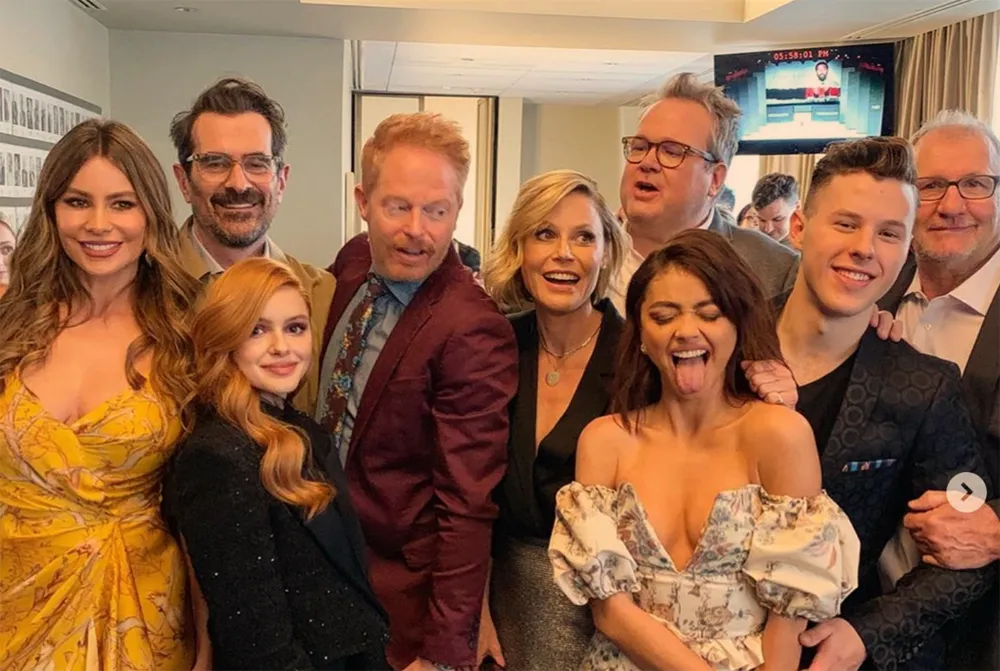
Modern Family ran for eleven seasons on ABC, from 2009 to 2020. During that time, it won five consecutive Emmy Awards for Outstanding Comedy Series. It made audiences laugh, cry, and feel deeply connected to three very different families living under one extended roof. However, what truly set it apart was not just the humor or the characters. It was the way the show was told. Modern Family used a format called the mockumentary, and understanding that format changes how you experience the entire series.
This article breaks down exactly what the mockumentary format is, how Modern Family uses it, and why it works so powerfully as a storytelling tool.
What Is a Mockumentary and Where Did It Come From
The word mockumentary comes from combining “mock” and “documentary.” It is a fictional story told using the visual language and techniques of a real documentary film. Cameras follow characters around. Scenes are shot handheld, giving them a raw, unpolished look. Characters speak directly to the camera as if being interviewed. There is no traditional narrator and no background music to tell you how to feel.
The format has a long history. It became widely recognized in film with movies like “This Is Spinal Tap” in 1984 and “Best in Show” in 2000. On television, the British version of “The Office,” which premiered in 2001, brought the format into the mainstream. The American version of “The Office,” followed by “Parks and Recreation” and “Abbott Elementary,” all built on that foundation.
However, Modern Family used the mockumentary format in a distinctly different way. While those other shows centered on a single workplace, Modern Family applied it to family life across three separate households. That shift created something new and particularly effective.
The Three Families and How the Format Connects Them
Modern Family follows three interconnected families. Jay Pritchett is a successful businessman in his second marriage to Gloria, a Colombian woman with a young son named Manny. Jay’s daughter Claire is married to Phil Dunphy, and together they have three children: Haley, Alex, and Luke. Jay’s son Mitchell is in a committed relationship with Cameron Tucker, and together they are raising an adopted Vietnamese daughter named Lily.
On paper, these three families seem very different from each other. However, the mockumentary format is what ties them together. The invisible documentary crew follows all three households, capturing their lives as if producing a real family documentary. This creates a shared context that makes the audience feel like an insider across all three family units simultaneously.
Additionally, the format allows the show to cut between families mid-scene. You might be watching Jay try to give Mitchell advice, and then the camera cuts to Mitchell in his own home, unknowingly making the same mistake his father just warned about. That kind of ironic cross-cutting works because the mockumentary setup makes it believable that a single crew could follow all three families at once.
The Talking Head Interview: The Heart of the Format
The most recognizable feature of the mockumentary style is the talking head interview. This is when a character sits alone, faces the camera directly, and speaks as if being interviewed by an unseen documentarian. In Modern Family, these moments are used constantly, and they serve several important functions.
First, they replace the need for an internal monologue. In a traditional drama, a character’s thoughts might be conveyed through a voice-over or a private conversation. In Modern Family, the talking head does that work more naturally. You simply hear the character explain what they were thinking in the moment.
Second, the talking head creates dramatic irony. Dramatic irony is when the audience knows something a character does not. For example, Phil might sit in a talking head interview and confidently explain exactly why his plan is going to work perfectly. The audience, however, already knows from a previous scene that his plan is about to fall apart completely. That gap between what Phil believes and what the audience knows is the source of enormous comedy.
Third, the talking head allows characters to be unreliable narrators. Characters in Modern Family frequently describe events in ways that are slightly self-serving or inaccurate. Gloria insists she understood a joke. Jay claims he was not emotional. Mitchell denies that he overreacted. The audience can compare what the character says in the interview with what they actually saw happen on screen. Therefore, the talking head becomes a comedic tool in itself, not just a narrative device.
Why the Handheld Camera Style Matters
Beyond the talking heads, the mockumentary format shapes how every scene in Modern Family is filmed. Traditional sitcoms are usually shot with multiple stationary cameras on a studio stage in front of a live audience. Modern Family, by contrast, is shot on location with handheld cameras, natural lighting, and no laugh track.
This choice has a profound effect on how the show feels. Handheld cameras follow characters into tight spaces: cramped kitchens, crowded cars, noisy backyards. The camera zooms in on a reaction. It pans quickly to catch a joke. It holds on a character’s face a beat too long after something embarrassing happens. These are all techniques borrowed from real documentary filmmaking, and they make the fictional world feel strangely real.
The absence of a laugh track is also significant. Traditional sitcoms use laugh tracks to cue the audience. You hear laughter and you know a joke just landed. Modern Family does not do this. Instead, the humor lands through performance, timing, and the reactions of other characters. This makes the comedy feel more earned. It also means the show can move more fluidly between funny moments and genuinely touching ones, because there is no jarring canned laughter to interrupt the emotional shift.
Additionally, shooting on location rather than on a studio stage gives the world of the show a grounded, lived-in quality. The Dunphy house feels like an actual house. Gloria’s kitchen feels like an actual kitchen. These spaces have texture, depth, and imperfection in a way that studio sets often do not.
How the Format Creates Emotional Authenticity
One of the most surprising things about Modern Family is how emotionally affecting it can be. A show structured around jokes and misunderstandings still manages to generate genuine feeling. The mockumentary format is a large reason for this.
Real documentaries ask subjects to reflect on their experiences. They invite people to be vulnerable in front of a camera. Modern Family borrows that quality. Characters frequently use their talking head interviews not just for comedy but for genuine confession. Mitchell admits his fears about being a good father. Claire acknowledges her anxiety about losing control. Phil reveals his deep desire to be liked by everyone around him.
These confessions are delivered in a casual, conversational tone. They do not feel like dramatic speeches. They feel like something a real person might say if a camera crew had been following them for months and they had finally stopped trying to keep up appearances. Therefore, the format itself encourages emotional honesty from characters who might otherwise hide behind humor.
Furthermore, the show often ends episodes with a quiet talking head moment that reframes the chaos of the preceding twenty minutes. Characters reflect on what happened and, in doing so, find the meaning inside the mess. These endings work because the documentary format has primed the audience to receive that kind of direct, unfiltered reflection.

The Format as a Tool for Social Commentary
Modern Family premiered at a time when same-sex marriage was still a deeply contested issue in the United States. Mitchell and Cameron’s relationship was a central part of the show from the very first episode. The mockumentary format played a specific role in making that storyline land the way it did.
Because the format presents characters as real people being observed rather than fictional archetypes being performed, it humanizes them in a particular way. Mitchell and Cameron were not presented as a statement or a symbol. They were presented as two people trying to raise a daughter, manage their careers, and navigate family dynamics, just like everyone else in the show. The matter-of-fact camera work and the talking head confessions made them ordinary in the best possible sense.
Additionally, the show used the format to explore generational differences, cultural clashes between Gloria’s Colombian heritage and Jay’s more traditional American background, and the gap between how parents see themselves and how their children see them. Because these themes were embedded in the documentary structure, they felt observed rather than preached. The camera was simply watching. What you concluded was up to you.
Comparing Modern Family to Other Mockumentaries
It is worth understanding how Modern Family’s use of the format differs from other well-known mockumentaries. “The Office” uses the format to create a slow-burning, often deeply uncomfortable type of comedy. The camera lingers on awkward silences. Characters frequently look directly at the lens in disbelief. The tone is often cringe-worthy by design.
Modern Family, by contrast, uses the format with a warmer touch. The comedy is broader and more accessible. The families are fundamentally loving even when they are driving each other crazy. The talking heads are funnier and less melancholy than those in “The Office.” Therefore, while both shows use the same basic toolkit, they produce very different emotional experiences.
“Parks and Recreation” is perhaps the closest cousin to Modern Family in tone. Both shows use the mockumentary format to celebrate rather than satirize their subjects. However, Modern Family’s multi-family structure gives it a complexity that most single-location mockumentaries do not have.
Tips for Watching Modern Family with New Eyes
Now that you understand the mockumentary format, you can approach the show more actively as a viewer. Here are a few things to look for:
- Watch the talking heads carefully. Notice when a character’s version of events does not match what you just saw on screen.
- Pay attention to the camera’s reaction shots. When one character says something, the camera often quickly cuts to another character’s face. That reaction is doing comedic work.
- Notice how the show transitions between families. The cuts are often thematically linked, even when the families are in completely separate locations.
- Listen for moments when characters address the camera directly outside of formal interviews. These subtle breaks in the format are significant.
- Watch the final talking head of each episode. It almost always reframes the episode’s theme and gives the story its emotional resonance.
Conclusion
Modern Family is more than a funny show about family life. It is a carefully constructed piece of storytelling built on a format that rewards close attention. The mockumentary style, with its talking head interviews, handheld cameras, and documentary-inspired realism, is not just a visual choice. It is the engine that drives the comedy, the emotion, and the meaning of the entire series.
By understanding how the format works, you gain a much richer experience of the show. You see why the humor lands, why the emotional moments feel real, and why the characters feel like people you actually know. The invisible documentary crew following these three families around is the invisible thread that holds all eleven seasons together.
Next time you watch an episode, look beyond the jokes. Notice the craft. Modern Family is a master class in using a simple format to tell complex, human stories. And once you see it that way, you cannot unsee it.
Frequently Asked Questions
What does the term mockumentary mean in the context of Modern Family?
A mockumentary is a fictional story told using the style and techniques of a real documentary. In Modern Family, this means handheld cameras, no laugh track, scenes shot on location, and characters speaking directly to an unseen camera crew through talking head interviews. The result is a fictional comedy that feels surprisingly real and grounded.
Why does Modern Family not have a laugh track?
Modern Family intentionally avoided a laugh track to reinforce its documentary feel. Real documentaries do not have laugh tracks. By removing it, the show allows humor to land more naturally through performance and timing. It also gives the show the freedom to shift between comedy and genuine emotion without awkward interruptions.
How does the talking head interview create comedy in Modern Family?
The talking head works comedically in several ways. It lets characters describe events inaccurately or with unwarranted confidence, creating dramatic irony. It allows the audience to compare what characters say they were thinking with what actually happened on screen. Additionally, the timing and delivery of talking head lines often function as a comedic punchline following the main scene.
How is Modern Family’s mockumentary style different from The Office?
While both shows use the mockumentary format, the tone differs significantly. The Office leans into awkward, uncomfortable, and often dark comedy. Modern Family uses a warmer, more broadly accessible style. The families are loving and the humor is more celebratory than satirical. Additionally, Modern Family’s multi-household structure gives it a storytelling complexity that single-location mockumentaries typically do not have.
Did Modern Family ever explain why a documentary crew was following the families?
The show never fully explained the in-world reason for the documentary crew’s presence. This ambiguity was intentional. The creators chose to keep the format as a stylistic frame rather than a plot element. However, in the final season, the show briefly acknowledged the crew’s existence more directly as part of the series finale’s storytelling, giving the format a satisfying meta-conclusion.
Related Topics:
The 9 best comedy series on Netflix to die of laughter
How to Find Netflix Comedy Series with Stand-Up Comedian Leads